
The Fight-First Model Is Broken
Apr 27, 2026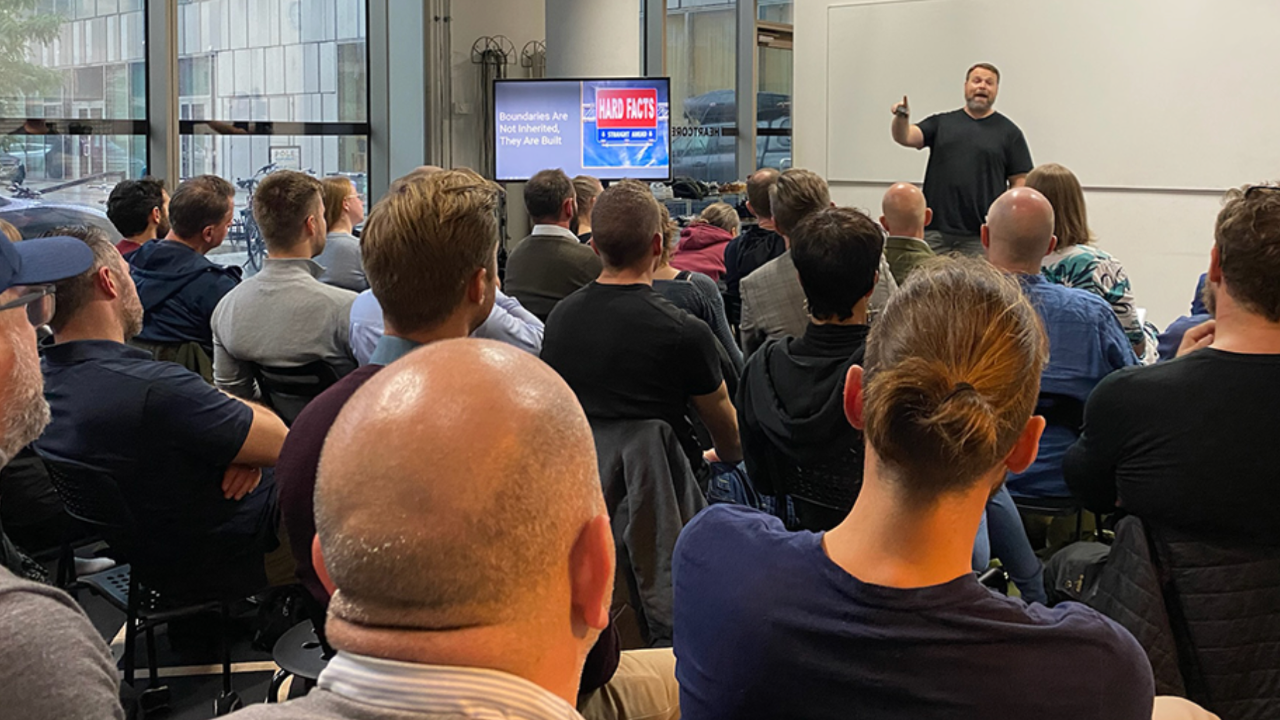
The Fight-First Model Is Broken
Why I stopped teaching people how to fight and started teaching them how to think
I lost my first real fight. Badly.
I was the youngest member of a security team at the time, relying on a background bolstered by a series of trophies to build my confidence. My taekwondo training was designed for controlled competitions, and it was completely ill-suited for the chaotic reality of bouncing. Nothing in my practice looked anything like what I was actually facing: low light, concrete underfoot, and a full-blast surge of stress chemicals flooding my system while my senses dealt with the sharp smells of cheap beer and body odour. My first strike stopped short before contact. Great way to score points. Not a great way to end a fight. I lost badly, and it proved how traditional training leaves out the messy, unpredictable elements that matter most.
I wish I could say I learned a valuable lesson from that experience. I didn't. It took years of additional encounters, a lot of study, and a major life event before I figured out what had actually gone wrong. That event was the birth of my daughter. Holding her for the first time, I realized that safety wasn't just about protecting myself anymore. It was about ensuring the safety of the vulnerable, the people who are disproportionately affected by violence. That was the beginning of a completely different approach.
The model I'd been trained in, the model that still dominates most schools and seminars today, is what I call the fight-first model. Lead with the physical. Master the technique. If something goes wrong, hit harder. It's how I was trained. It's how I trained others for a long time. And it's broken.
What the Fight-First Model Actually Gets Wrong
The fight-first model treats self-defense like a contest. Two people, a set of rules or no rules, a winner. That works fine as a framework for sport. For surviving actual violence, it falls apart pretty fast.
Real violence doesn't start with two people facing each other. It's sudden, it's interpersonal, and it's often psychological long before it ever gets physical. In a real encounter, the other person has already decided on the who, the what, the when, the where, and the why. You're not an opponent in that scenario. You're a target. And no amount of technique prepares you for that if technique is all you've got.
There's also a selection problem that nobody in the industry likes to talk about. The fight-first model drives away exactly the people who need these skills the most. When you walk into a room and the unspoken message is that you need to be tougher, you lose everyone who isn't there to become tougher. You lose the people who have already experienced violence and are trying to process and prepare. You lose the people who are statistically most at risk and least likely to see themselves as fighters.
I was that instructor for a long time. I had what I'd call martial-arts tunnel vision. I taught for people like me, and I let everyone else take care of their own backyards. That's a comfortable position to be in until you have someone in your life who lives in an apartment.
The Timeline of Self-Defense: Before, During, and After
What I developed out of all of this is what I call the Timeline of Self-Defense. It's a proactive, education-first model built around three phases: Before, During, and After. Every self-defense encounter follows a timeline whether you're aware of it or not. The major benefit of this approach is that detecting and addressing potential issues early makes them much easier to handle. The longer you wait, the fewer options you have.
Before is where most of the real work happens, and where most programs spend the least time. This is the phase of awareness, avoidance, and preparation. Situational awareness means being keenly observant of your surroundings and understanding the dynamics at play. Cultural awareness helps you navigate interactions and avoid the kind of misunderstandings that escalate. It also means understanding your own personal value and being clear on what boundaries you need in your life. The goal of the Before phase is simple: make sure no incident happens in the first place. That's the gold standard. Nothing happened.
During is the phase most people think about when someone says 'self-defense.' But even here the fight-first model gets the priorities wrong. Your primary goal during a dangerous situation isn't to dominate. It's to get out safely. That means running if you can run. De-escalating if that's a real option. Using physical force only when genuinely nothing else is available. The best encounter is the one that never goes physical. Understanding your body's natural responses under threat, what actually happens during a freeze, when flight becomes possible, and when fighting becomes the only remaining choice, is what gives you real options when things go sideways.
After is the phase the industry almost completely ignores. Violence has an aftermath. Legal, psychological, relational. What does reporting look like? What does rebuilding your sense of safety look like? How do you recover from something serious and get back to normal life? A complete self-defense model has to address those questions. Not just what to do with your hands.
This is what separates the Timeline from a standard combatives curriculum. It doesn't assume the job is done when the physical threat stops.
The 80:20 Method
The Timeline is the big picture. Inside it, I organize training using what I call the 80:20 Method. This is not the Pareto Principle, that '80 percent of outcomes come from 20 percent of effort' thing. This is specific to self-defense training.
80 percent of your training should focus on proactive skills: awareness, avoidance, de-escalation, boundary-setting, and understanding how criminal behaviour actually develops. The remaining 20 percent is physical. Most programs have this completely inverted, spending the overwhelming majority of class time on techniques and treating everything else as an afterthought, if they cover it at all.
The best part? You can practice proactive skills all the time, for free, no gym membership required. Just stay attentive. Pay attention to the room you're in. Notice who's near the exit. Read the energy of a situation before it develops. That's training. Physical skills, on the other hand, are perishable. They require serious, consistent work to hold up under real stress, when your system is flooded with adrenaline and you're dealing with sensory overload in a situation you've never actually been in before. The 20 percent matters. Train physically. But it can't carry the whole load that the fight-first model asks it to carry.
Self-Defense Is Safety Training
Here's the reframe that changes everything: self-defense isn't fighting. Self-defense is safety training. Same category as wearing a seatbelt, taking a first-aid course, owning a fire extinguisher. These are life skills. The goal isn't to prove you're the most capable person in a situation. The goal is to leave that situation with minimal impact on your life. As I like to say, 'Avoid the incident altogether.' That's always the win.
When you frame it that way, the door opens for everyone. Not just the young and athletic. Not just people who already picture themselves as fighters. Everyone who wants to live more safely and more deliberately.
And here's what I've found over thirty years of teaching: good self-protection skills are also good life skills. Improved awareness helps you notice interesting things around you. Stronger communication and clearer boundaries help build better relationships and filter out the people who mean you harm. Understanding criminal motivation helps you recognize when something is developing long before it becomes a crisis. This philosophy of training is both self-defense and self-improvement. As it should be.
None of the lessons that shaped this approach came easily. They were earned through testing, client feedback from seminars and classes, interviews, and a fair share of mistakes along the way. It quickly became apparent that a fight-first approach often left people ill-prepared. Sometimes it made things worse.
Don't learn from me because I made no mistakes. Learn from me because I made them all, so you don't have to.
Ready to stop guessing and start knowing?
What you just read is one small piece of a system that has been tested in 14 countries, 80+ cities, and more real-world situations than most people will ever encounter. The Timeline of Self-Defense gives you the complete Before, During, and After framework — so you can protect yourself and the people you love without fear, false confidence, or wasted training.
Get the book here → [YOUR BOOK LINK]
Don't learn from me because I made no mistakes. Learn from me because I made them all — so you don't have to.
Randy King is the founder of Randy King Live and co-founder of the Institute of Modern Defence. With over twenty years of experience in personal protection, he is the author of Timeline of Self-Defense (YMAA Publication Center). Learn more at RandyKingLive.com.
Stay connected with news and updates!
Join our mailing list to receive the latest news and updates from our team.
Don't worry, your information will not be shared.
We hate SPAM. We will never sell your information, for any reason.
